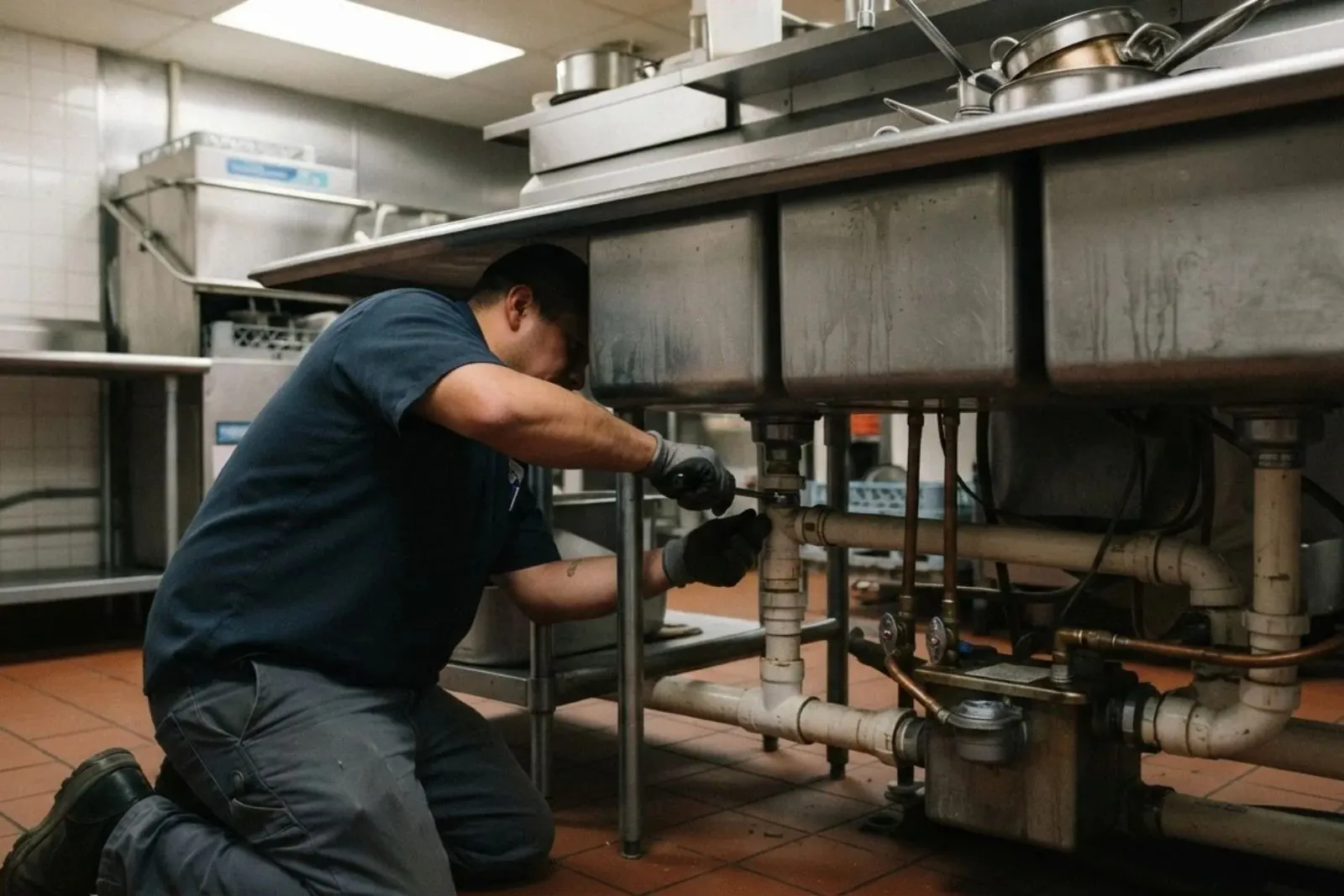
Commercial plumbing built around business hours
Commercial plumbing covers the water supply, drainage, and fixtures in buildings used by the public or by employees, from a single-suite shop to a multi-tenant center. It differs from residential work in scale, in code requirements, and in how much downtime costs.
A clogged kitchen line at a restaurant during the lunch rush or a restroom out of service at a clinic is more than an inconvenience. Scheduling around opening hours, and knowing which fixtures must stay in service, are part of doing the job right.
Surprise has a lot of this work along its main commercial corridors, and the city runs its own programs on commercial pretreatment and fats, oils, and grease. Those rules shape how many businesses handle their drains.
Emergency commercial plumbing: overflowing drains and water in the lot
For a business, a plumbing failure is also a closed door. Callers report floor drains that are overflowing, water coming up in a parking lot at an apartment complex and leaks inside a shopping plaza unit. We dispatch those as emergencies.
Tell us at the start that it is a business property, the size of the building and whether you are the owner or a property manager. That helps us plan the crew and the equipment.
- 1Close the building main if you can.Property managers should know where each building's shutoff is.
- 2Keep people away from wet floors.Block off the area and put out signs.
- 3Note the affected units.Tell us which units and which fixtures.
- 4Call the emergency line.We dispatch a commercial-capable plumber.
Commercial plumbing we handle in Surprise
These are the service lines businesses call about most.
| Service | Typical properties | Notes |
|---|---|---|
| Grease-line drain cleaning | Restaurants, cafes, food service | Kitchen lines need regular cleaning to keep grease from reaching the sewer. |
| Restroom fixture repair | Retail, offices, clinics | Flush valves, faucets, and ADA fixtures kept in service. |
| Backflow testing and repair | Most commercial connections | Assemblies need testing by a certified tester at least once a year. |
| Commercial water heaters | Salons, restaurants, laundries | Larger tanks and high-demand units. |
| Leak detection | Any building with a rising bill. | Locating hidden leaks without tearing up finished spaces. |
| Tenant improvement plumbing | New suites and remodels | Rough-in and fixture setting for new layouts. |
Grease, the city, and your kitchen line
The City of Surprise has a fats, oils, and grease program and a commercial pretreatment program aimed at keeping grease out of the public sewer. Food service businesses usually need a grease interceptor or trap that is maintained on a schedule. On the supply side, the IPC requires backflow protection wherever a connection could let contaminants reach drinking water.
A neglected trap sends grease into your own lateral first. Regular trap pumping and periodic line cleaning cost far less than a blocked line during service, and they keep records in order if the city asks.
What to do before a commercial service visit
A little preparation keeps the visit short and your business open.
- Know the building's shutoffs. Find the main and any suite-level valves, especially in multi-tenant buildings.
- Check who approves the work. Property managers and landlords often need to sign off before work starts.
- Note your busy hours. Telling us when you cannot lose water or a restroom lets the visit be scheduled around them.
- Gather maintenance records. Backflow test reports and grease trap service logs help diagnose repeat problems.
- Clear access. Make sure cleanouts, the water heater, and the backflow assembly are reachable.
Property managers and landlords
Many commercial calls come from property managers acting for tenants. Clear lines of approval, a named contact on site, and a written price before work help those jobs move without delays.
Residential rentals follow the same pattern. A landlord calling for a tenant's leak should give the tenant's contact and say who approves the cost, so the plumber is not left waiting at the door.
For recurring needs like annual backflow testing or scheduled line cleaning, setting a regular calendar prevents the emergency calls that disrupt a business.
Businesses along Bell Road and Grand Avenue sit inside Maricopa County, but the grease and pretreatment rules that apply to them are set by the City of Surprise. The city program, not the county, is the one to follow for inspections and trap records. Newer retail and restaurant space around Prasada near Loop 303 adds to that list, and many of those buildings are only a few years into their grease trap and backflow schedules.
What changes the cost of commercial plumbing
Businesses get a written quote, scheduled around opening hours.
| Cost factor | How it moves the price |
|---|---|
| After-hours scheduling | Work done before opening or after closing may carry a higher rate than daytime work. |
| Code and permits | Commercial changes often need permits and inspections. |
| Fixture type | Commercial flush valves and ADA fixtures cost more than residential parts. |
| Access in occupied space | Working around customers, stock, or equipment adds time. |
| Scale of the system | Larger buildings mean longer lines and more fixtures to test. |
Commercial coverage notes
Commercial property policies vary widely. Some cover sudden water damage and business interruption, while wear and grease blockages are usually excluded. Check with your carrier or landlord.
Need a quote for your property? Call (623) 301-9042 with the address and the type of business.
Commercial leak detection, grease traps and drain work
Commercial calls vary more than residential ones. We hear from owners who suspect a leak in a parking lot, property managers with a four-unit building that keeps losing water and facilities with grates that need to be lifted to reach a drain. Some call for a survey across a whole property after repeated notices from the water department.
Restaurants and shops also ask about grease trap pump-outs and floor drain service. Tell us what you have, and we plan the visit around it.
Commercial plumbing questions
Yes. Commercial visits can be scheduled early or late to avoid disrupting customers. The 24/7 line is available for anything urgent.
Most food service businesses need a grease interceptor or trap under the city's fats, oils, and grease rules. The city's pretreatment program sets the requirements for your type of business.
Once a year at minimum for testable assemblies, done by a certified tester who reports the results to the water provider.
Yes. Give us the manager's contact and who approves costs, and we will coordinate the visit and pricing with them.
Check that no fixtures are running, then look at the meter's leak indicator with everything off. If it moves, leak detection can find the source without opening up finished walls.
Yes. Rough-in and fixture setting for new suites and remodels are part of commercial service, with permits handled where required.
Yes. We locate leaks in commercial properties, including parking lots, supply lines and multi-unit buildings. A survey of the whole property is possible when the water meter keeps running.
Tell us the trap size and location when you call. We confirm what service fits and quote before the work starts.
Related services for businesses
Kitchen lines that clog often benefit from hydro jetting to scour grease, and a rising water bill in a commercial space is a job for commercial leak detection.
Commercial service is also available to businesses in El Mirage along the Grand Avenue corridor, with the same scheduling around business hours.