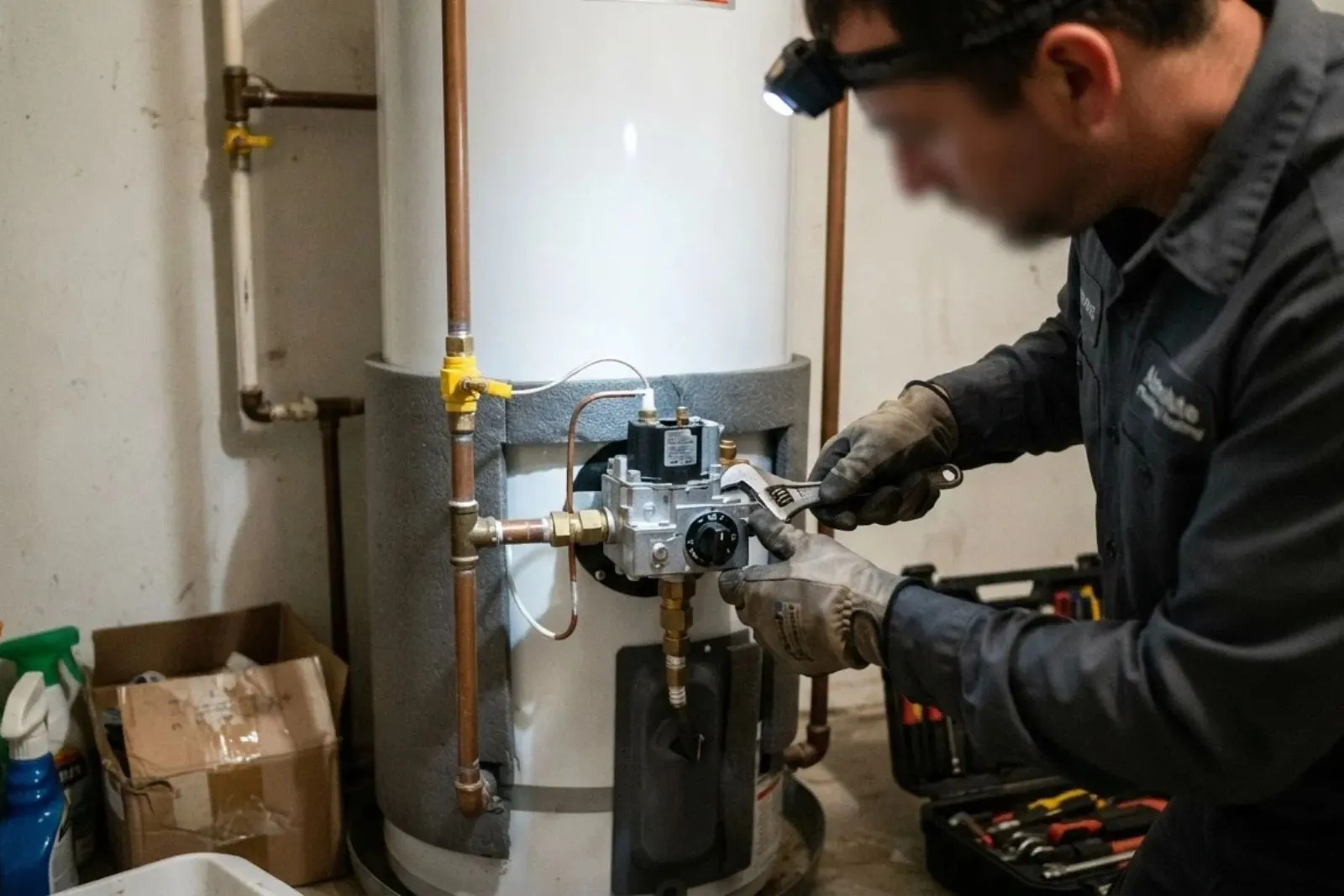
Water heater repair around the clock when the hot water quits
Water heater repair means finding and replacing the specific part that stopped the unit from heating or started it leaking, without replacing the whole heater. On a gas tank that is often the thermocouple or gas control valve. On an electric tank it is usually a heating element or thermostat.
Our emergency water heater repair line runs 24/7 because no hot water on a winter morning, or a relief valve spraying in the garage, is not something to wait out. The plumber confirms the cause, gives the price, and makes the repair.
Repair only makes sense when the tank itself is sound. When water comes from the tank body, the tank is done, and the honest answer is replacement, not a part.
Emergency water heater leak: shut it down before you call
A tank that is leaking onto a garage floor or into an attic is the most common emergency we dispatch for. Callers tell us about a bucket that keeps filling, a drain pan full of water, or a ceiling stain under the heater. Water heaters in the West Valley often sit in garages and attics, so a small leak can travel before anyone sees it.
A slow drip from a fitting is one problem. Water pouring from the bottom of the tank usually means the tank has failed and replacement is the realistic fix.
- 1Turn off the cold water supply.The shutoff valve is on the pipe entering the top of the tank. Turn it clockwise.
- 2Switch off the heat source.For electric heaters, turn off the breaker. For gas, set the control to off or pilot.
- 3Contain the water.Move stored items away, put a bucket under any drip and use towels at doorways.
- 4Call the emergency line.We will tell you whether the unit can be repaired or needs replacement, and quote the price before work begins.
Match the symptom to the likely cause
The symptom narrows down the part before anything is taken apart.
| Symptom | Gas unit | Electric unit |
|---|---|---|
| No hot water at all. | Pilot out, failed thermocouple, or bad gas valve. | Tripped breaker, burned-out element, or high-limit switch. |
| Lukewarm water only | Thermostat set low or a failing gas valve. | One of two elements has failed. |
| Popping or rumbling | Sediment on the tank bottom. | Sediment around the lower element. |
| Rotten egg smell in hot water. | Reaction with the anode rod. | Reaction with the anode rod. |
| Water at the relief valve pipe. | High pressure or overheating | High pressure or a stuck thermostat. |
| Water pooling under the tank. | A leaking fitting, or a failed tank. | A leaking fitting, or a failed tank. |
What to do first when a water heater acts up
A water heater stores scalding water under pressure and, on gas units, burns fuel. Take these steps before anything else.
- Smell gas? Get out. Leave the house without flipping any switches. Once you are clear of the building, phone the gas utility or 911.
- Relief valve discharging? Keep clear of the pipe and shut off the gas or breaker to the heater. The IPC requires this temperature and pressure relief valve on every storage heater, and constant discharge means it is doing its job against excess heat or pressure.
- Tank leaking? Close the cold water valve above the heater and switch off its gas or power.
- Protect the floor. Move stored items away from the tank and put towels or a pan where water is heading.
- Check the breaker or pilot. A tripped breaker or a pilot blown out by a gust can be the entire problem. If it trips or goes out again, call.
How hard water and garage heat wear out heaters here
Scale is the quiet enemy of Surprise water heaters. Minerals settle to the bottom of the tank as a layer that the burner or element has to heat through. That is what causes popping sounds, longer heating times, and overheated tank bottoms.
Flushing a few gallons from the drain valve once or twice a year slows the buildup. On an older tank that has never been flushed, though, a heavy flush can loosen enough sediment to clog the drain valve, so it is worth having someone look first.
Heat is the other factor. Garage air in a Surprise summer often runs well above the temperature inside the house, which adds stress on thermostats, valves, and plastic parts. A unit that fails in August often had a part that was already weakened.
Scale is heavier in some parts of Maricopa County than others, and in Surprise it depends on which of the two suppliers, EPCOR or the City of Surprise, serves your home. Repair calls from the older streets off Bell Road often turn up tanks with years of sediment on the bottom.
Many homes in Kingswood Parke and the early streets of Sun City Grand are on their second or third water heater, while newer Asante homes often still have the original.
Repair or replace? A simple way to decide
The decision usually comes down to age, where it is leaking, and the size of the repair bill.
| Situation | Usually | Why |
|---|---|---|
| Under 8 years old, one failed part. | Repair | The tank has plenty of life left. |
| 8 to 12 years, part failed, no leak. | Repair, but plan ahead | The fix is sound, but budget for a replacement soon. |
| Leaking from the tank body. | Replace | A corroded tank cannot be repaired. |
| Repair cost near half of a new unit. | Replace | Money is better spent on a heater with a full life ahead. |
| Repeated repairs in one year. | Replace | Several failures point to a tank near the end. |
What changes the cost of a water heater repair
Diagnosis comes first, then a firm number you can say yes or no to.
| Cost factor | How it moves the price |
|---|---|
| The failed part | A thermocouple or element costs less than a gas control valve or a tankless circuit board. |
| Gas, electric, or tankless | Tankless diagnosis takes more time and parts are often brand-specific. |
| Time of the call | A repair at 2 a.m. or on a holiday is priced above a weekday visit. |
| Code fixes found on site. | A missing expansion tank or a bad relief line may need correcting during the repair. |
| Sediment | A badly scaled tank may need flushing before a repair will hold. |
Insurance and water heater failures
Insurance generally treats a worn-out part as maintenance and will not pay for the repair. A sudden tank failure that floods the garage may be covered for the water damage, so take photos first.
Want a repair price? Call (623) 301-9042 and describe what the heater is doing.
Leaking tanks, attic leaks and no hot water: the calls we hear most
Leaks from the heater itself and from the lines connected to it make up most of our water heater calls. Typical reports include water in the drain pan, a leak in an attic from the line that leaves the heater, and a tank that is about fifteen years old and finally weeping.
The other group is no hot water. Pilot lights that will not stay lit, ignition buttons that no longer reignite the burner and a heater that quit overnight all fall here. A failed thermostat, element, gas valve or thermocouple is usually behind it, and many are repairable the same visit.
Some owners call after a recent replacement because a connection is dripping or the new unit will not heat. Tell us that when you call so the plumber looks at the install first.
Water heater repair questions from Surprise
Yes, the emergency line is answered 24/7. If the tank is leaking or the relief valve is discharging, that is handled as urgent.
The gas control valve may not be opening the main burner, or the thermostat is set too low. On older units a failing thermocouple can also cause intermittent shutdowns.
Sediment has built up on the bottom of the tank. Water trapped under it boils and pops. Flushing helps if caught early.
A leak from a fitting is a nuisance. A leak from the tank body means the tank has failed and can release more water without warning. Shut off the cold supply and power or gas, then call.
The smell comes from a reaction between sulfate-reducing bacteria and the anode rod. It is usually a nuisance rather than a hazard, and swapping the anode rod type often fixes it.
If the tank is under about 8 years old and not leaking, a repair usually makes sense. If it is leaking from the body or the repair costs near half a new unit, replacement is the better value.
Yes. A leaking water heater is handled on the 24/7 emergency line. Shut off the cold water supply to the tank first if you can, then call.
A leak from the tank body means the steel has failed and repair is not possible. A leak from a fitting, valve or supply line can often be repaired. The plumber checks the source before recommending either.
Related help
When a repair is not the right call, water heater replacement covers choosing and installing a new unit. On-demand units have their own upkeep, covered on our tankless heater service page.
Rural lots north along Grand Avenue often run propane heaters. Our Wittmann plumbing page covers how those calls differ.